
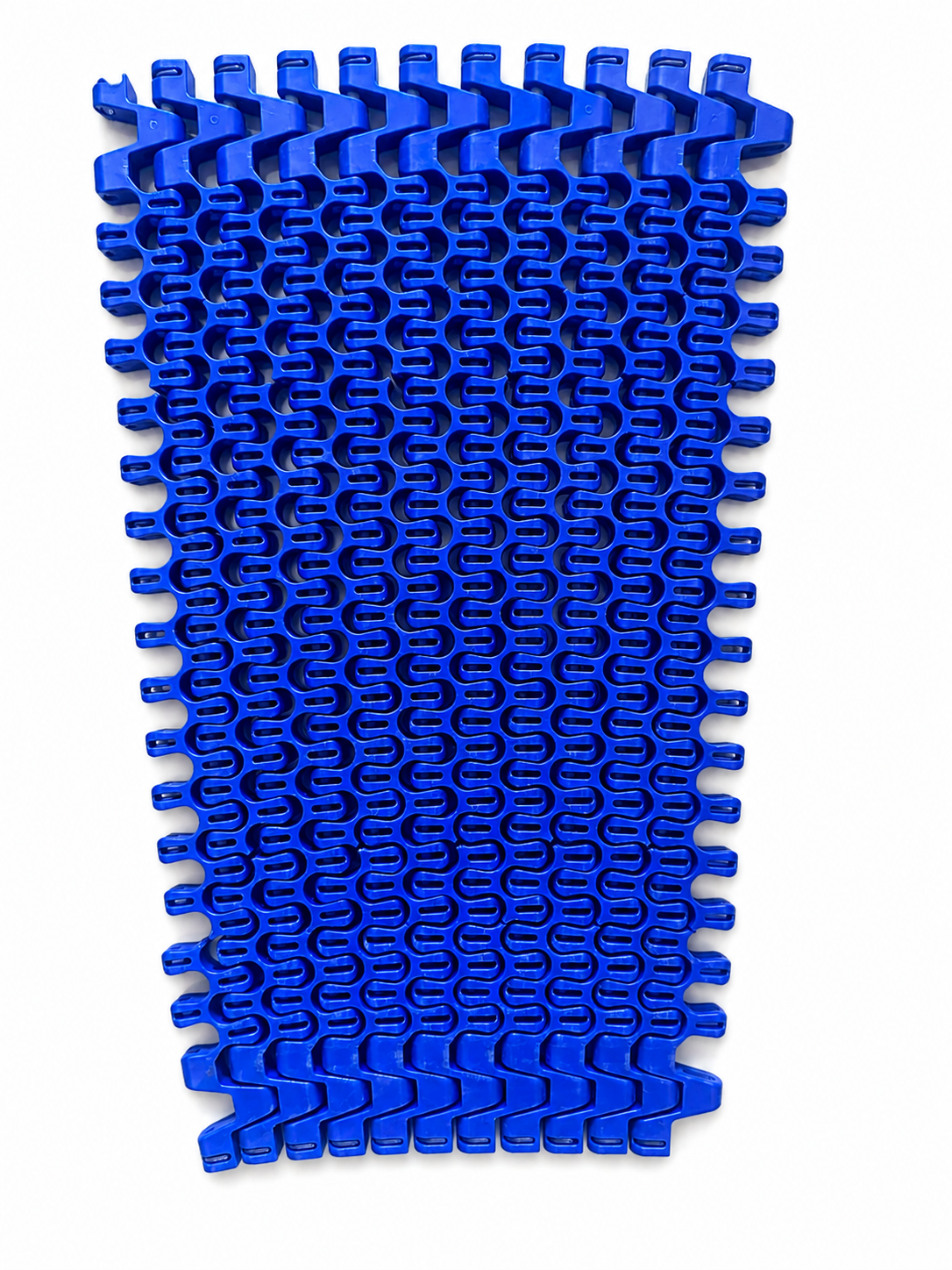
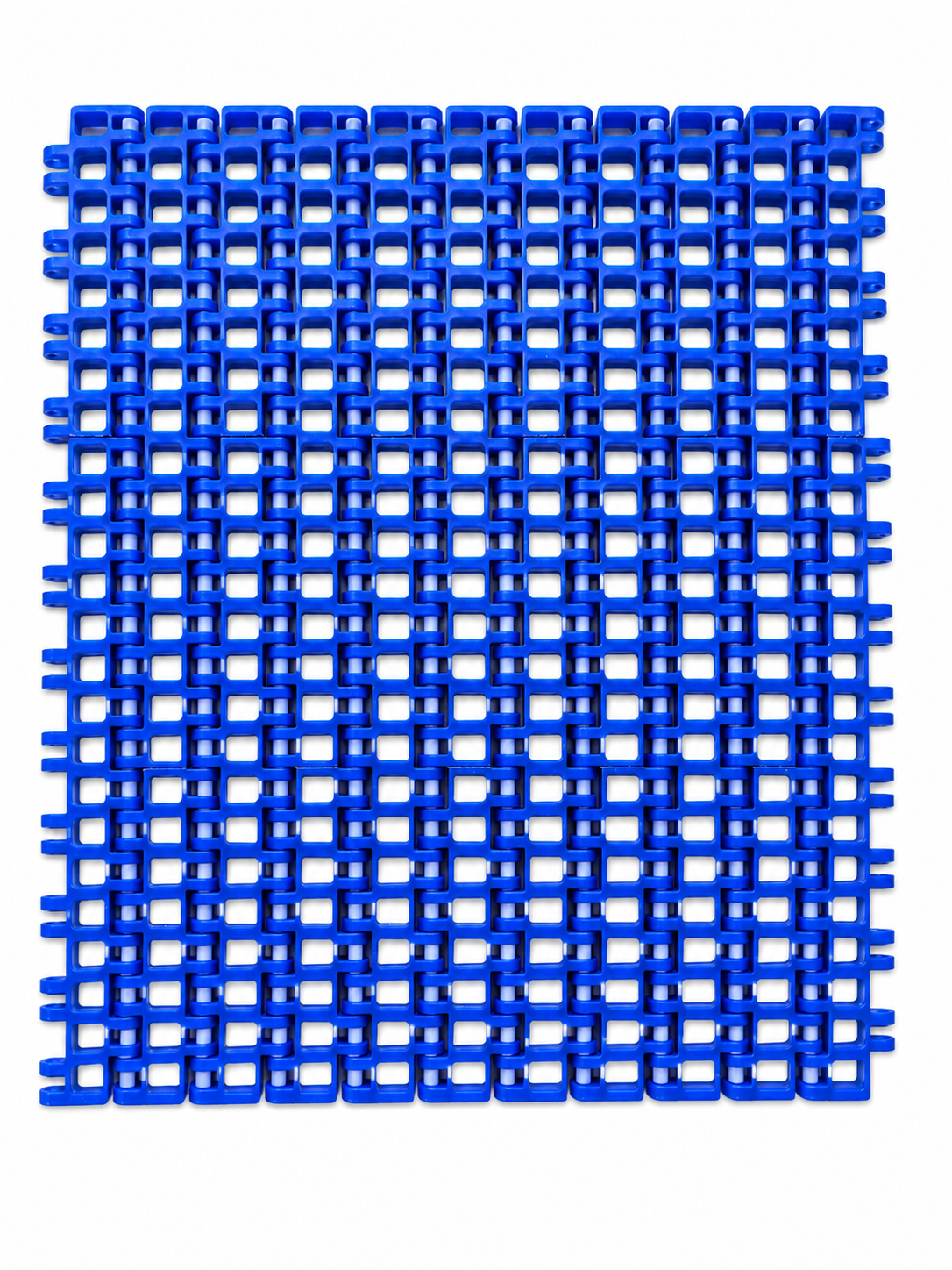
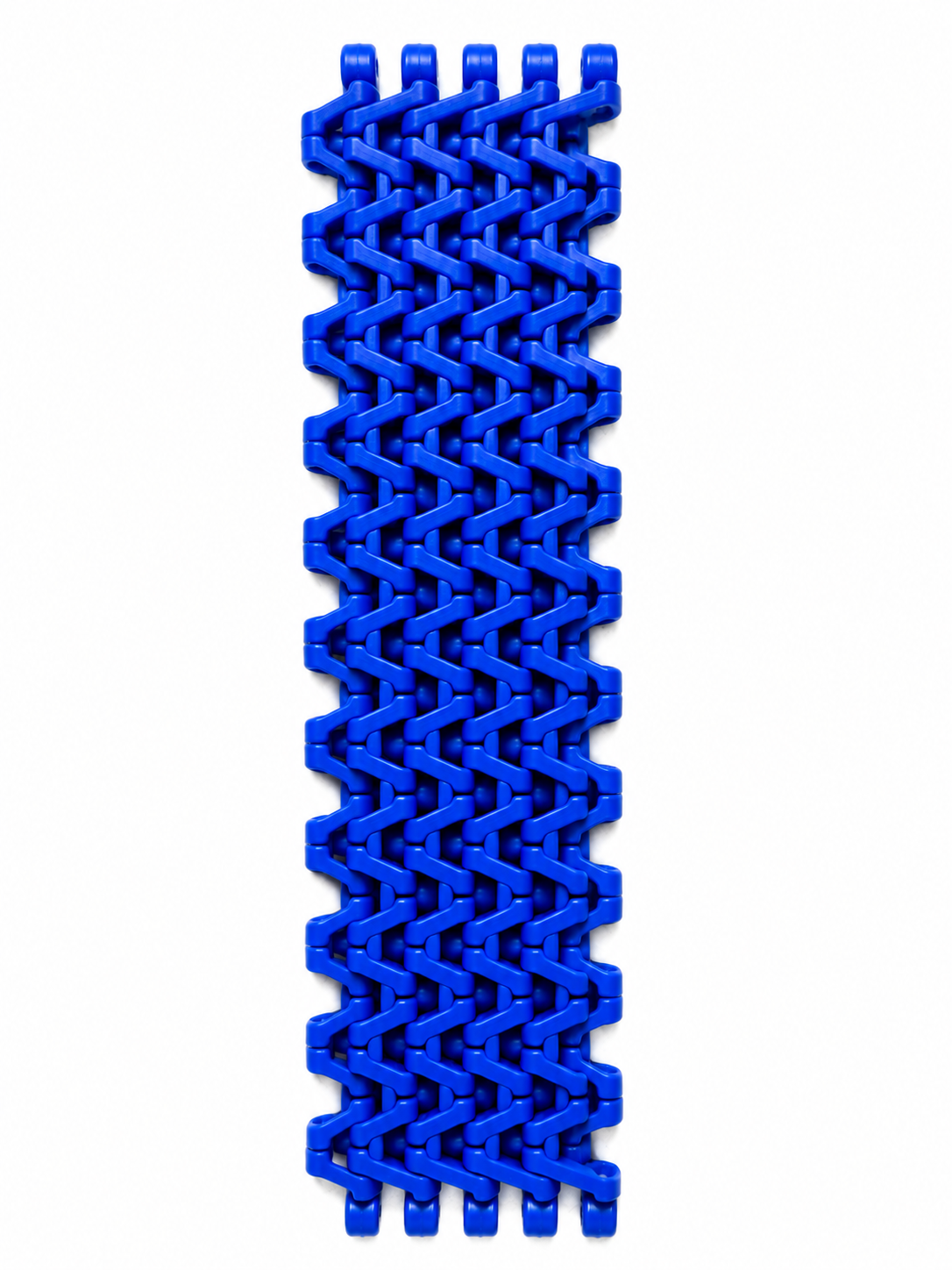
BLUE MODULAR CONVEYOR BELTS FOR BAKERY INDUSTRY
Price on request
Blue modular conveyor belts provide a versatile and reliable solution for modern bakery operations. Their hygienic properties, flexible configurations, and efficient performance make them a preferred choice across all stages of bakery production, from raw handling to final packaging.
Description
Overview
Blue modular conveyor belts are widely used in bakery operations due to their hygienic design, durability, and visual detectability in food environments. Designed for both straight and radius conveying, these belts support efficient product handling across multiple bakery processes, from dough preparation to packaging.
The modular construction allows flexibility in system design while maintaining consistent tracking, easy maintenance, and reliable long-term performance in demanding production conditions.
Typical Belt Types
Flush Grid Belts – Balanced surface with open area for airflow, cooling, and drainage
Flat Top Belts – Solid conveying surface for stable product transfer
Perforated Belts – Minimal openings for controlled airflow and fine product handling
Radius Belts – Designed for curved conveyor layouts with tight turning capability
Technical Characteristics
Pitch Range: Typically 10 mm – 25 mm
Link Thickness: 6 mm – 15 mm
Open Area: 0% – 30% (application dependent)
Drive Method: Hinge driven / sprocket driven
Travel: Directional or bi-directional (depending on design)
Link Layout: Bricklayed for improved tracking stability
Material Construction
Belt Material: Acetal (POM) – standard for food applications
Alternative Materials: Polypropylene (PP) for chemical resistance
Rod Material: Glass-filled nylon or stainless steel
Rod Retention: Offset or locked system to prevent migration
Operating Performance
Temperature Range: -40°C to +90°C (material dependent)
Belt Weight: Varies by design and thickness
Minimum Radius: Typically 2.2 – 2.6 × belt width (for radius belts)
Design Characteristics
Blue belts are specifically selected for food safety compliance and contamination control, as the colour improves visual detection of foreign objects. The modular design enables quick replacement of damaged sections, reducing downtime.
Flush grid and open designs allow airflow for cooling baked goods, while flat top variants provide stable transfer for delicate or packaged products. Radius-capable belts support compact conveyor layouts, optimising factory floor space.
Application Areas
Dough handling and proofing lines
Oven infeed and outfeed conveyors
Cooling and drying tunnels
Slicing and portioning lines
Packaging and inspection systems
Key Advantages
Hygienic and food-safe material options
Excellent airflow for cooling applications
Flexible layouts including curves and elevation changes
Low maintenance with easy modular repairs
High visibility (blue colour) for contamination control
Limitations / Considerations
Open grid designs may not support very small or soft products
Directional belts cannot be reversed
Radius belts require correct minimum radius design
Material selection must match temperature and chemical exposure
